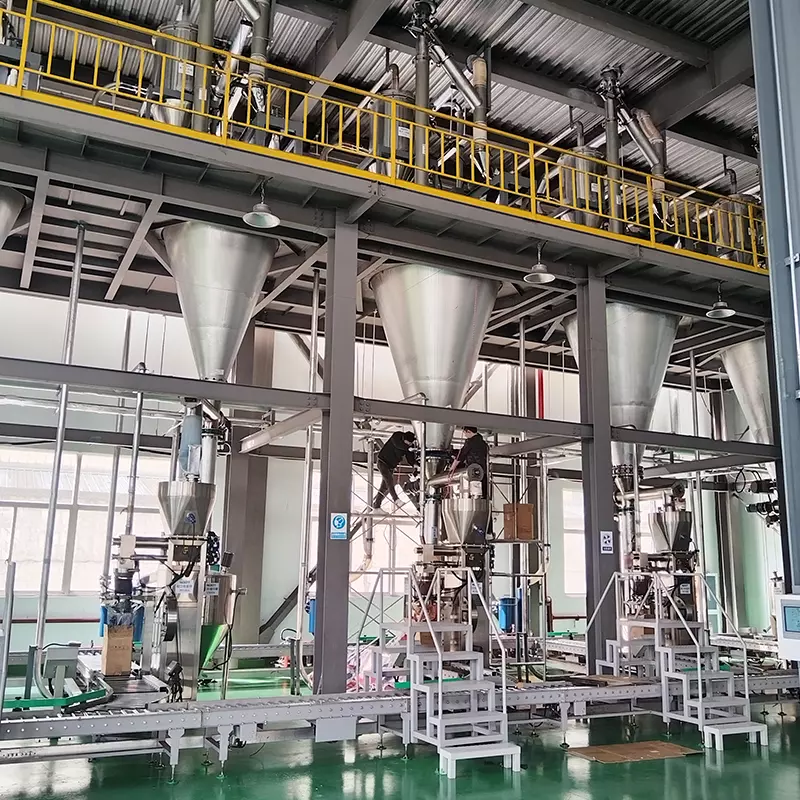
Product Description:
The double helix conical mixer is widely used in the powder mixing processes of industries such as chemical engineering, pesticides, dyes, food, battery materials, and rare earths.
Product Features:
1. It has the strict standard of ensuring no residue in the discharge of mixed materials.
2. The gentle stirring method does not damage fragile materials such as crystalline substances.
3. The low-energy consumption feature enables a more effective mixing effect, which is particularly suitable for chemical reactions of the materials.
4. The arc-shaped upper cover structure avoids any potential hygiene cleaning blind spots.
5. Equipped with a spherical discharge valve, the discharge process is more thorough and stable.
Technical Specifications:
The total volume of the equipment is 0.3 to 30 cubic meters.
Processing capacity per batch: 0.1 to 15 cubic meters
Each batch processes 0.1 to 20 tons of materials.
The mixing time used was between 15 and 60 minutes.
Drive configuration power: 1.5KW - 55KW
The material of the equipment can be 316L, 321, 304 or carbon steel.
Working principle:
The double helix conical mixing equipment, with two asymmetric spirals on the internal arm, rotates around its own axis while being driven by the arm, and simultaneously rotates around the central axis of the cylinder to form revolution. The double helix conical mixing equipment can generate four types of directional forces:
1. Two asymmetrical spirals rotate independently, lifting the material upwards.
2. The cantilever rotates slowly, causing the materials to undergo a circular motion.
3. The spiral revolution and rotation work together, absorbing the materials through the spiral rotation and simultaneously discharging them in a circular direction.
4. The two upward-moving material streams that have been elevated then converge towards the center, forming a downward flow at the center to fill the void area at the bottom, thereby creating an overall circulation flow.
Specification parameters:
1. Determine the volume of the materials to be mixed in each batch, which ranges from 0.1 to 20 cubic meters, and select the corresponding equipment of the appropriate size.
2. Select the materials for the equipment. The materials are classified as follows: the parts in contact with the materials, the parts not in contact with the materials, and the other components of the equipment retain their original materials. The material is determined based on factors such as the properties of the materials, the working conditions, and the hygiene level. Commonly, carbon steel, 304/316L/321 stainless steel are selected, and the surface treatment requirements are determined according to the specified requirements.
3. Based on the properties of the materials (such as their density and fluidity), as well as the startup standards, determine the required driving capacity for the configuration. Starting standards: Heavy-load start, No-load start.
4. Based on the actual production process, additional auxiliary functional components can be added, such as liquid spraying, heating/cooling, etc.
5. Specify the requirements for the openings of the equipment, such as the feeding port, cleaning port, and exhaust hole, etc.
6. Select the discharging mode and the driving method, which can be either manual, pneumatic or electric.
Important Note: The selection of equipment is a crucial step. Please provide as much detailed information about the materials and the process arrangement as possible, so that our professional staff can offer you high-quality technical services.