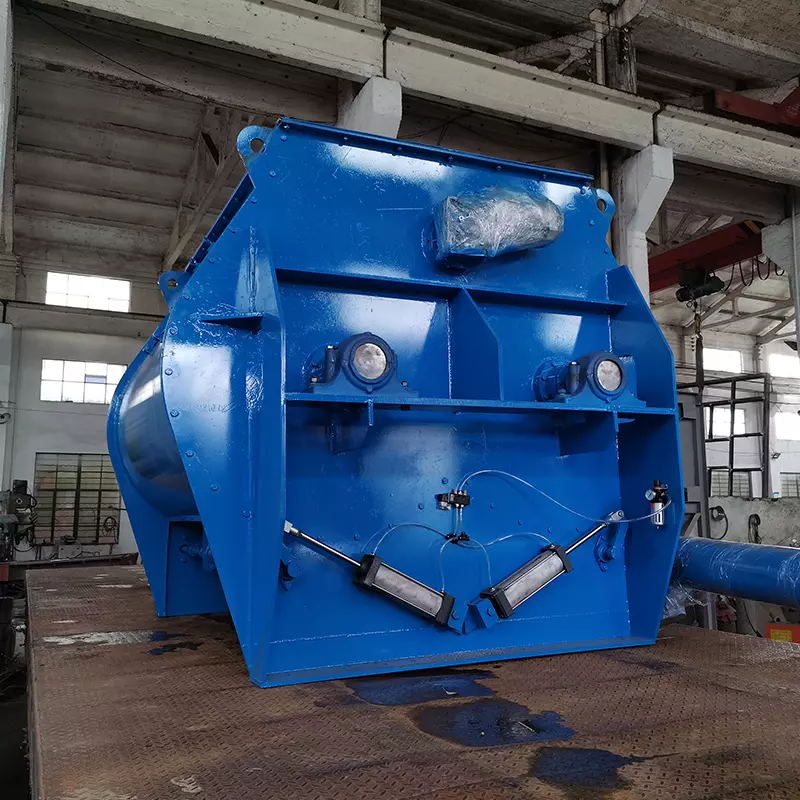
Product Description:
The WZL non-gravity mixer is widely used in the fields of chemical engineering, biology, and building materials. It can be used for the mixing of powders, particles, fibers, etc. It has a strong stirring force and can achieve rapid mixing in a short time. It is particularly good at mixing materials with significant differences in physical properties such as specific gravity, fineness, and fluidity. The non-gravity mixer is prominently applied in fields such as electronic batteries, building mortars, environmental protection industries, mining, and agriculture.
Technical Specifications:
The total volume of the equipment is 0.3 to 30 cubic meters.
Processing capacity per batch: 0.1 to 20 cubic meters
Material processed per batch: 0.3 to 10 tons
Mixing time used: 2 to 10 minutes
Drive configuration power: 3KW - 150KW
Material can be made of 316L, 321, 304, or carbon steel
Working principle:
The zero-gravity mixer is equipped with two parallel shafts that rotate in opposite directions simultaneously. Each shaft is equipped with cross-shaped blades. Under the synchronous action of the driving device, the running trajectories of the two cross-shaped blade shafts intersect and are misaligned and meshed. The driving device drives the blade shafts to rotate rapidly. The rotating blades generate centrifugal force, effectively spraying the materials to the upper part of the cylinder. After reaching the apex of the parabolic curve, they fall (the apex of the parabolic curve is also called the instantaneous zero-gravity state). The materials are then driven by the blades, circulating and mixing in the cylinder, and undergo mixing, shearing, and separation in the intermeshing space of the two axes, resulting in rapid and uniform mixing of the materials.
Specification parameters:
1. Determine the volume of the materials to be mixed in each batch, which ranges from 0.1 to 20 cubic meters, and select the corresponding equipment of the appropriate size.
2. Select the materials for the equipment. The materials are classified as those in contact with the materials and those not in contact with the materials. Other components of the equipment retain their original materials.The materials are determined based on factors such as the properties of the materials, operating conditions, and hygiene level. Commonly used materials include carbon steel, 304/316L/321 stainless steel. After selection, the surface treatment requirements are determined according to the requirements.
3. Determine the driving capacity based on the properties of the materials, such as density and fluidity, as well as the startup standards. Startup standards include heavy-load startup and no-load startup.
4. Add auxiliary functional components based on the actual process conditions, such as liquid spraying, heating/cooling, etc.
5. Specify the opening requirements for the equipment, such as the feeding port, cleaning port, exhaust hole, etc.
6. Select the discharging mode and driving method, including manual, pneumatic, and electric.
Important Note: The selection of equipment is a crucial step. Please provide detailed information about the materials and process arrangements as much as possible so that our professional staff can provide you with high-quality technical services.